
You sent a risky text. Ten seconds later, the reply comes back: “WTH.”
Now you’re staring at your screen trying to figure out — is this person laughing, annoyed, or genuinely confused? Three letters. Zero context. That’s the thing about WTH meaning in text — it hits differently depending on everything around it.
This guide kills the guesswork. You’ll know exactly what WTH means, how people actually use it, when it’s fine, when it’s a problem, and how to read it correctly every single time.
What Does WTH Mean in Text? (Quick Answer)
WTH stands for “What The Hell” or “What The Heck.” It is used in text messages and online conversations to express surprise, confusion, frustration, or disbelief. The “heck” version is the milder alternative chosen when someone wants to avoid stronger language in semi-public or mixed-audience settings.
WTH full form: What The Hell / What The Heck
Tone: Surprised, confused, frustrated, or amused
Used in: Texts, WhatsApp, Instagram, TikTok, Discord, gaming chats
WTH Meaning at a Glance
| Term | Full Form | Tone | Common Use |
| WTH | What The Hell | Intense, emotional | Close friends, casual online spaces |
| WTH | What The Heck | Light, casual | Family chats, school settings, public posts |
| wth | What The Hell/Heck | Relaxed, low-key | Personal texting, quiet reactions |
What Does WTH Actually Mean?
WTH is not just a shortcut — it’s a compressed emotional reaction. When someone types WTH, they’re not calmly reporting information. They’re reacting. Something hit them fast and hard enough that a full sentence felt too slow.
Literal Meaning
“What the hell” and “what the heck” are English exclamatory phrases used when something unexpected, confusing, or frustrating happens. The abbreviation WTH captures the same reaction in three keystrokes.
Emotional Meaning Behind WTH
The same three letters can mean very different things depending on what surrounds them:
- Shock — Something genuinely unexpected just happened
- Confusion — The situation makes no sense and they need clarity
- Frustration — Something went wrong and they’re venting mildly
- Disbelief — They can’t accept what they’re hearing as real
- Amused disbelief — It’s so ridiculous it’s actually funny
Why People Use WTH Instead of the Full Phrase
Speed is one reason. But there’s another: abbreviations in texting create emotional shorthand. Typing “WTH” signals I’m reacting right now in a way that a full sentence doesn’t. It matches the pace of digital conversation — fast, punchy, instant.
Where Is WTH Commonly Used?
WTH appears across every major digital platform. Here’s where you’ll encounter it most:
Text Messages
The most natural home for WTH. Friends fire it back and forth when something unexpected happens — a cancelled plan, surprising news, a confusing situation. It fits the quick back-and-forth rhythm of texting better than almost any other reaction.
Online Chats
In real-time messaging apps like WhatsApp or Telegram, WTH works as an instant reaction. It keeps the conversation moving without requiring a full explanation of how you feel.
Social Media
On Twitter/X, Instagram, and TikTok, WTH dominates comment sections. It appears under shocking videos, unexpected celebrity news, plot twists in viral content, and anything that makes someone stop mid-scroll.
Gaming Communities
Gamers use WTH constantly — a bad call, an impossible kill, a glitch that costs the match. You’ll find it across Discord servers, Twitch chat, and console party chats multiple times per session.
Messaging Apps (WhatsApp, Snapchat, Instagram, TikTok, Discord)
| Platform | How WTH Is Typically Used |
| Group chat reactions, personal messages | |
| Snapchat | Quick reaction to a surprising snap or story |
| Comment sections on shocking or funny posts | |
| TikTok | Replies to unexpected video content |
| Discord | Gaming servers, pop culture channels |
How Did WTH Become Popular?
Origin of WTH
“What the hell” has been part of spoken English for over a century — a casual exclamation with roots in everyday American and British speech. It carried no specific cultural origin; it simply evolved as a common reaction phrase in daily conversation.
When the internet arrived and instant messaging platforms like AIM, MSN Messenger, and Yahoo Chat became mainstream in the late 1990s, people started compressing common phrases into abbreviations to type faster. WTH emerged naturally alongside LOL, OMG, BRB, and SMH during this period.
Growth in Internet Culture
By the mid-2000s, WTH had settled into internet vocabulary permanently. The rise of social media — Twitter, Facebook, Instagram — gave it a public-facing platform where mild expressions like WTH were preferred over stronger alternatives that could offend wider audiences.
The “heck” version grew in parallel specifically because social media made communication public. Saying “what the heck” online reads as expressive without being offensive — which made it ideal for comment sections, replies, and public posts.
How Do People Use WTH in Conversations?
WTH covers four main emotional registers. Each one reads slightly differently in context:
Surprise
Used when news or information is genuinely unexpected — not necessarily bad, just shocking.
Example:
“They’re giving everyone Friday off this week.”
“WTH, since when??”
Confusion
Used when a situation makes no sense and the person needs clarity or is just processing something baffling.
Example:
“The assignment changed but the deadline didn’t.”
“WTH does that even mean?”
Frustration
A mild vent. Not a full breakdown — just an instant expression of something going wrong.
Example:
“My order’s been delayed again.”
“WTH this is the third time.”
Disbelief
Something sounds too strange, too unlikely, or too dramatic to be real.
Example:
“He just quit mid-shift and walked out.”
“WTH seriously??”
Real Examples of WTH in Text Conversations
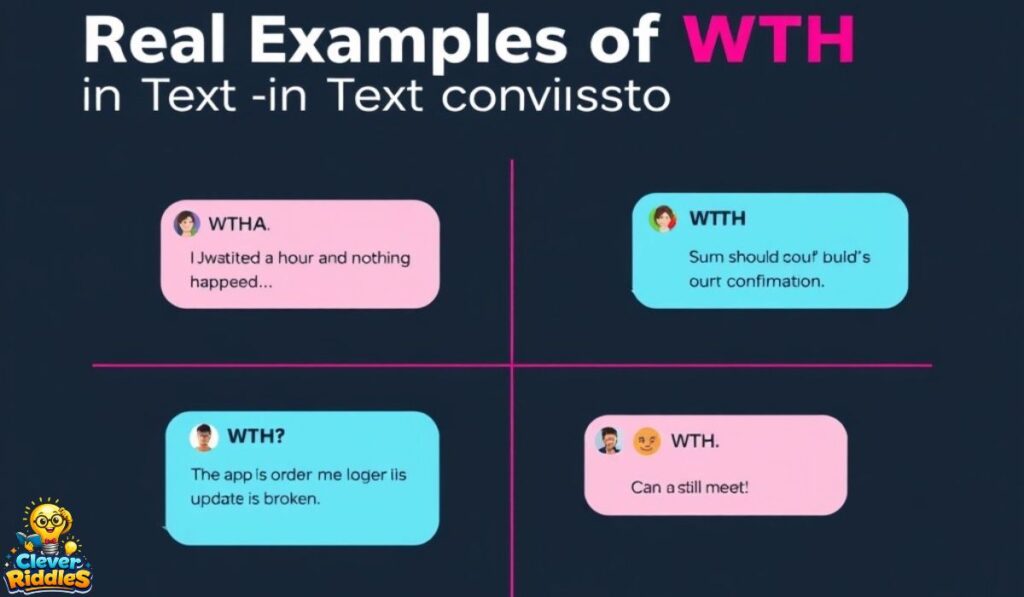
These are conversations that actually sound like people talking — not script exercises.
Between Friends
Rida: ok so you know how I said I’d be 10 minutes late
Sara: yeah
Rida: it’s been 45
Sara: WTH Rida I’m literally standing outside 😭
Family Chat
Bhai: guys ammi booked us all flights to Karachi for next weekend
You: WTH when did this happen
Bhai: I found out an hour ago same
School/University
Classmate: prof moved the quiz to tomorrow morning 8am
You: WTH I have bio lab at 8
Classmate: yeah half the class is losing it rn
Social Media Comment
[Video of a guy trying to open a car door, the handle comes fully off in his hand]
Comment 1: WTH 💀💀
Comment 2: bro held it too confidently
Gaming Chat
Player: I had full health bro how did I just die from that
Teammate: WTH the hitbox on that map is cooked fr
The One Thing Most WTH Articles Never Tell You
(Unique section — not covered by competitors)
Most articles about WTH explain what it means and leave it there. But there’s something more useful to understand: WTH is a social signal, not just a reaction.
When someone sends you WTH, they’re not just telling you they’re surprised. They’re opening a conversational door. They’re signaling: “I need you to explain this, engage with this, or acknowledge this.”
This is what linguists call a back-channel signal — a short utterance that tells the other person your listening, reacting, and waiting. In digital communication, WTH functions the same way a raised eyebrow or a sharp inhale does in face-to-face conversation.
That means how you respond to WTH matters more than most people realize:
- If someone sends WTH after surprising news — they want engagement, not silence
- If someone sends WTH after something confusing — they want an explanation
- If someone sends WTH in a heated moment — they want acknowledgment before anything else
Reading WTH as just “they’re shocked” misses the social function entirely. It’s a conversational cue. Treat it like one.
Is WTH Rude or Offensive?
WTH is generally not considered rude or offensive in casual digital communication. The “heck” version carries almost no offensive weight in most social contexts. The “hell” version is mild by modern standards and widely accepted in informal settings.
When It’s Acceptable
- Casual texting with friends and family
- Reactions in gaming or fan communities
- Social media comments on public posts
- Group chats with people you know well
Situations Where It May Sound Offensive
Tone in text is invisible. A WTH sent sarcastically after an argument lands very differently from a WTH sent in a funny meme exchange. The word itself isn’t the problem — the surrounding context is. If the conversation is already tense, WTH can read as dismissive or aggressive even when it wasn’t intended that way.
Formal vs Casual Communication
WTH is informal slang. It has no place in professional emails, academic writing, customer service communication, or any formal channel. Simple rule: if the message starts with “Dear” or ends with “Regards,” WTH does not belong anywhere inside it.
Tone, Punctuation, and Capitalization
Small changes in how WTH is written shift its meaning significantly.
WTH vs wth
- WTH (caps) — Louder, more intense, higher emotional charge
- wth (lowercase) — Casual, quiet, low-key reaction
Punctuation Changes Everything
| Version | Reading |
| WTH | Neutral reaction, mild surprise |
| WTH? | Genuine question, confused tone |
| WTH! | Statement of shock or frustration |
| WTH?! | Maximum disbelief — shocked and questioning |
| WTH??? | Extreme confusion, often playful |
Emojis Shift the Tone Further
- WTH 😂 — Amused, finding it funny
- WTH 😭 — Overwhelmed or dramatic
- WTH 😤 — Genuinely frustrated
- WTH 💀 — So absurd it’s hilarious (internet death = laughing)
How and When to Use WTH Correctly
Best Situations to Use It
- Reacting to unexpected news from someone you know
- Responding to a shocking or funny video or meme
- Expressing mild frustration in a casual group chat
- Commenting on surprising social media content
- Venting during a gaming session with friends
When to Avoid Using WTH
- Professional or work emails and messages
- Serious or emotionally sensitive conversations
- Messages to people you’ve just met
- Formal academic settings
- Any communication where the audience may not know internet slang
Using WTH at Work or School
Among classmates in personal chats — generally fine. In messages to teachers, professors, or managers — never. At work, WTH belongs in personal conversations between coworkers who know each other well, not in official communication channels or client-facing messages.
How to Respond When Someone Sends WTH
Clarify the Situation
If your WTH moment confused the other person, give them context fast. They’re clearly waiting for an explanation.
“WTH happened?”
“Okay so basically — [clear explanation].”
Respond with Humor
If the situation is ridiculous and lighthearted, match the energy completely.
“WTH is that??”
“I know 😂 I can’t explain it either.”
Give an Honest Explanation
If someone is frustrated by something you said or did, don’t get defensive — just address it directly.
“WTH why didn’t you tell me earlier?”
“Honestly you’re right, I should have. My bad.”
Stay Calm in Serious Conversations
If WTH signals real frustration, don’t escalate. Keep your reply calm, clear, and direct. One measured response usually de-escalates faster than matching the emotional intensity.
WTH vs WTF vs OMG: What’s the Difference?
WTH, WTF, and OMG all express surprise or disbelief — but they sit at very different points on the intensity and appropriateness scale.
Meaning Comparison
| Abbreviation | Full Form | Core Meaning |
| WTH | What The Hell / Heck | Surprise, confusion, mild frustration |
| WTF | What The F*** | Strong shock, anger, intense disbelief |
| OMG | Oh My God | Excitement, surprise, disbelief |
Usage Comparison Table
| Factor | WTH | WTF | OMG |
| Intensity | Medium | High | Low–Medium |
| Offensive level | Low | High | Very low |
| Suitable for public posts | Yes | No | Yes |
| Suitable for family chats | Yes (heck version) | No | Yes |
| Safe for teens/younger users | Yes | No | Yes |
| Common on TikTok/Instagram | Yes | Rarely unfiltered | Yes |
Similar Slang Terms and Alternatives
Casual Alternatives to WTH
- WTF — Stronger, more explicit version for close friends only
- OMG — Lighter, often used for positive or neutral surprise
- SMH (Shaking My Head) — Disbelief or disappointment without shock
- Bruh — Casual disbelief, often amused
- No way — Shocked denial, works in both text and speech
- FR? (For Real?) — Seeking confirmation that something is actually true
Professional Alternatives
In any setting that requires professional tone, replace WTH with:
- “That’s surprising.”
- “I wasn’t expecting that.”
- “That came out of nowhere.”
Related Internet Slang Worth Knowing
- IKR (I Know Right) — Agreement about something surprising
- NGL (Not Gonna Lie) — Often precedes a surprising or honest admission
- Deadass? — Is this genuinely real?
- Say less — I understand completely, no further explanation needed
Common Misunderstandings About WTH
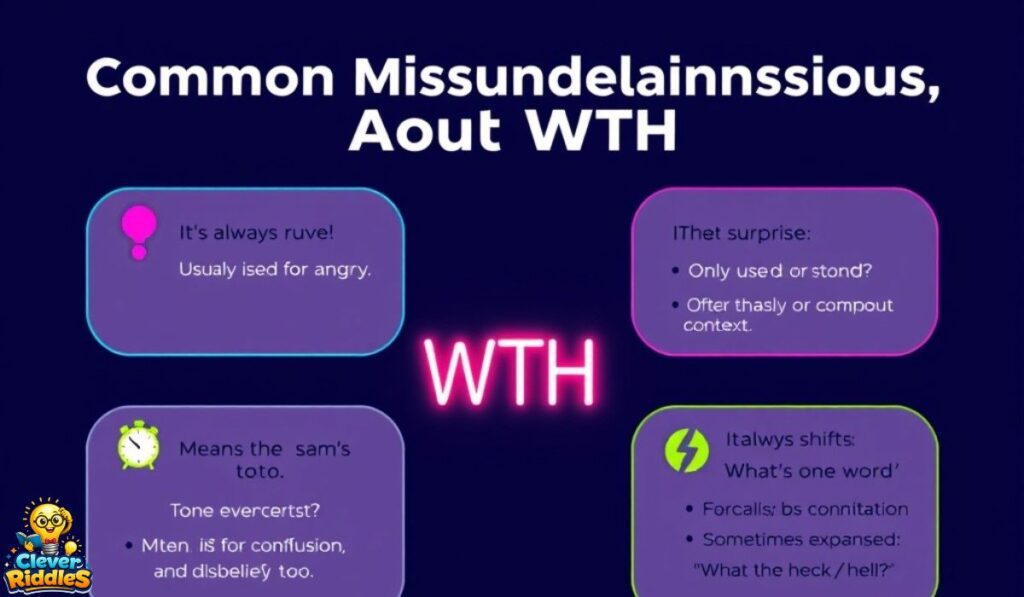
Assuming It’s Always Angry
WTH does not default to anger. In many conversations it’s playful, amused, or simply surprised. Reading hostility into every WTH leads to unnecessary tension in conversations that were never heated in the first place.
Misreading Tone in Text
Text removes vocal tone, facial expressions, and body language — the three things that make spoken WTH easy to read. A WTH that would sound completely lighthearted out loud can read as aggressive in a text with no surrounding context. Always factor in the relationship and what came before it.
Confusing WTH with Stronger Abbreviations
WTH and WTF are not interchangeable. WTH is appropriate in far more settings. Treating them as the same thing leads to either overreacting to mild messages or using language that’s genuinely too strong for the context.
Quick Reference Table
| Feature | Detail |
| Full form | What The Hell / What The Heck |
| Tone | Surprised, confused, frustrated, amused |
| Formality | Informal only |
| Platforms | Texts, WhatsApp, Instagram, TikTok, Discord |
| Intensity | Medium |
| Offensive level | Low |
| Best use cases | Reacting to unexpected news, funny content, casual venting |
| Avoid in | Work emails, academic writing, formal conversations |
Frequently Asked Questions
What does WTH stand for in texting?
WTH stands for “What The Hell” or “What The Heck” in texting. It is a widely used internet slang abbreviation that expresses surprise, confusion, frustration, or disbelief. The “heck” version is the softer alternative used in family-friendly or semi-public digital spaces.
Is WTH the same as WTF?
WTH and WTF share a similar meaning — both express shock or disbelief — but differ significantly in intensity and appropriateness. WTF uses explicit language and is considered crude in many contexts. WTH is far milder and acceptable across a much wider range of settings including family chats, school conversations, and public social media posts.
Is WTH considered rude?
WTH is generally not considered rude in casual digital conversations. The “heck” version carries very little offensive weight. However, context always matters — WTH in a tense conversation can feel dismissive or aggressive regardless of intent, purely because tone is invisible in text.
What does WTH mean from a girl?
WTH from a girl means exactly what WTH means from anyone — surprise, confusion, or mild frustration. The meaning of internet slang does not change based on the sender’s gender. What shapes the meaning is the context of the conversation and the relationship between the people involved, not who sent it.
What does WTH mean from a guy?
WTH from a guy carries the same meaning — shock, disbelief, or mild frustration. Gender does not affect what internet slang abbreviations mean. Tone and intent are shaped by context, punctuation, surrounding messages, and the nature of the relationship — not by who sent it.
Can I use WTH at work?
WTH is informal slang and should not appear in professional work communication — emails, client messages, Slack channels with managers, or any formal context. Among close coworkers in personal chats, it’s usually fine depending on the workplace culture. When in doubt, avoid it and choose professional language instead.
How should I reply to WTH?
The right reply depends entirely on context. If the person is confused, explain the situation clearly. If they’re reacting to something funny, match the energy. If they’re genuinely frustrated, stay calm and address the issue directly. Read the emotional tone of the conversation before deciding how to respond — WTH is a social signal as much as it is a reaction.
Is WTH appropriate for social media?
Yes — WTH is generally appropriate for social media platforms like Instagram, TikTok, Twitter/X, and Snapchat. It’s casual, widely understood, and not considered offensive. The “heck” version is especially safe for public posts. Avoid it on professional brand accounts or in formal social media communication.
The Bottom Line on WTH
Three letters. Dozens of meanings. All determined by context.
WTH meaning in text comes down to one core function: it’s a compressed emotional reaction that signals surprise, confusion, frustration, or disbelief — and more importantly, it’s a conversational cue that invites a response. When someone sends it, they’re not just venting. They’re telling you the conversation isn’t finished.
The full form — What The Hell or What The Heck — gives you the intensity range. The punctuation, capitalization, and emojis around it give you the tone. The relationship and conversation history give you the actual meaning.
Use it in casual digital spaces. Skip it in professional ones. And when someone sends it to you, don’t just register the reaction — respond to what they’re actually asking for.
Author Note: This article was reviewed for accuracy, SEO quality, and reader value by the editorial team at Cleverriddles.com.

Emilia is a passionate content writer and meaning explorer at Cleverriddles.com, dedicated to helping readers understand words, phrases, and concepts in the simplest way possible. With a strong interest in language, SEO, and digital trends, she creates easy-to-read, informative content that adds real value to users.