
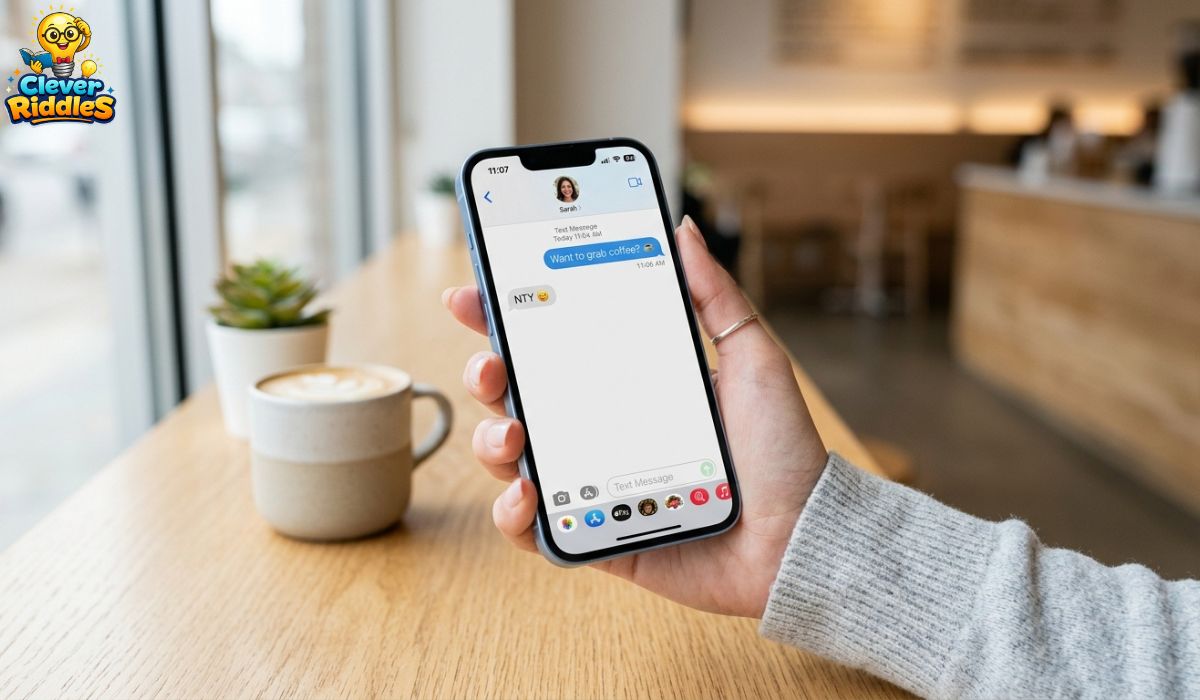
Texting acronyms have taken over digital communication. Every day, people send billions of messages using shortened versions of common phrases. One acronym that keeps appearing is NTY. If you have ever received a message with NTY and felt confused, you are not alone.
NTY stands for “No Thank You.” It is a quick and polite way to decline offers without typing out the full phrase. People use it everywhere from WhatsApp to Instagram to gaming chats. It saves time and keeps conversations flowing.
But here is the thing. Many people misuse NTY or misunderstand its tone. Some think it is rude. Others use it in formal settings where it does not belong. This confusion leads to awkward conversations and unnecessary misunderstandings.
This guide covers everything you need to know about NTY meaning in text. You will learn its definition, where to use it, how to reply when someone says it, and what mistakes to avoid. You will also discover how NTY compares to other acronyms like NVM, IDC, and TY.
By the end of this article, you will use NTY like a pro. No more confusion. No more awkward replies. Just clear, confident communication.
What Does NTY Mean in Text Messages?
Quick Definition of NTY
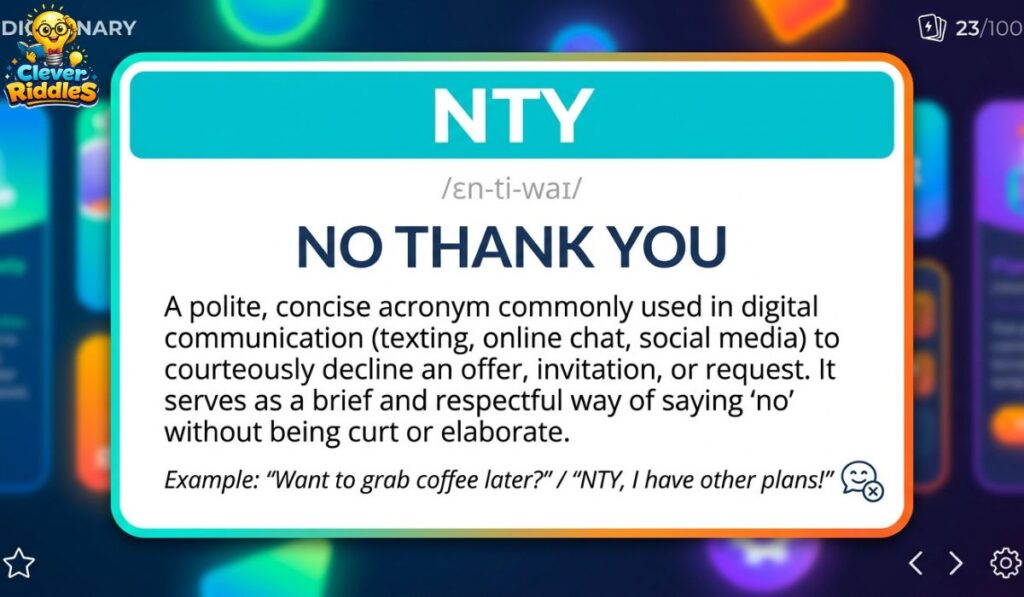
NTY stands for “No Thank You.” It is a quick and polite way to decline an offer or reject a suggestion in text messages and online chats. People use it to save time while still maintaining basic courtesy. This acronym has become a staple in digital communication.
The beauty of NTY lies in its simplicity. You do not need to type out the full phrase. You just drop three letters and move on. It works perfectly in fast paced conversations where every second matters.
Why Do People Use NTY Instead of “No, Thank You”?
People use NTY because typing is slower than thinking. When you are in a rapid fire chat, you want to respond quickly without sounding rude. NTY gives you that speed. It is three letters versus eleven characters including spaces.
Another reason is habit. Once you start using texting acronyms, they become second nature. You do not even think about it anymore. Your fingers just type NTY automatically. It is the same reason people use LOL, BRB, and TTYL without a second thought.
NTY also keeps conversations casual. If you type out “No, thank you,” it can feel overly formal in a friendly chat. NTY strikes the right balance between politeness and informality.
Where Is NTY Most Commonly Used?
NTY in Text Messaging

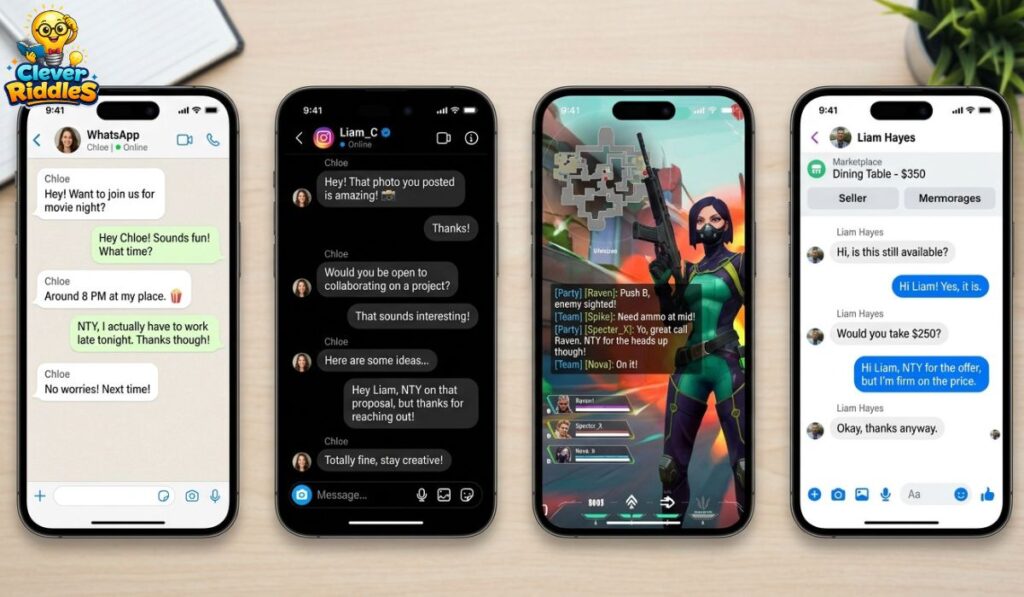
Text messaging is where NTY shines the brightest. It appears in standard SMS conversations, iMessage threads, and Android chat apps. People use it when friends invite them to events or offer them something they do not want.
For example, if your friend asks if you want to grab pizza and you are not hungry, you simply reply NTY. It ends the conversation quickly without hurting anyone’s feelings. The context makes it clear what you mean.
NTY on WhatsApp and Instagram
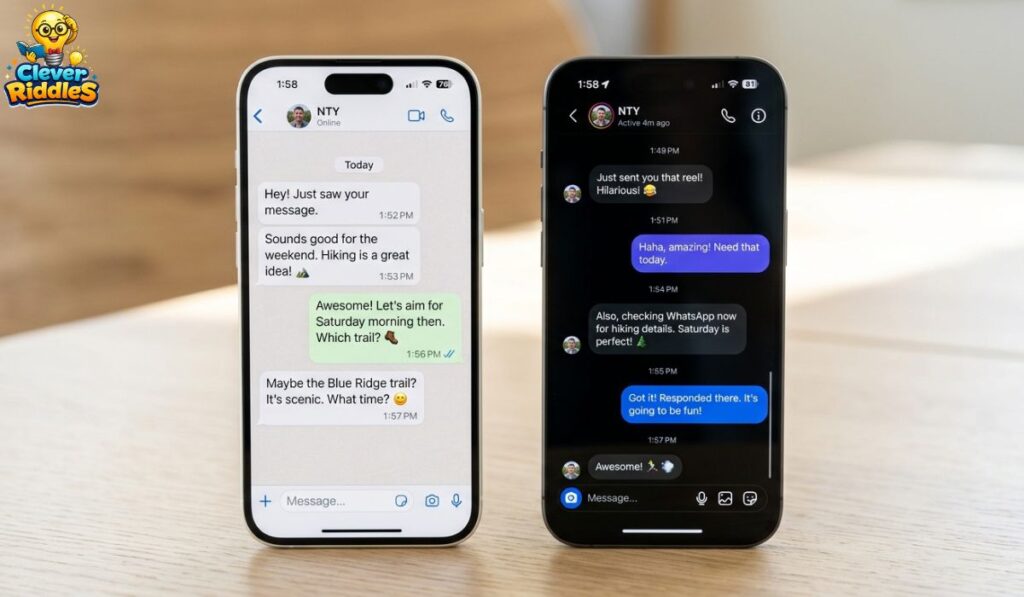
WhatsApp and Instagram are major platforms for NTY usage. These apps have billions of active users who communicate through direct messages. The casual nature of these platforms makes acronyms like NTY extremely popular.
On Instagram, you might see NTY in comments or DMs. Someone offers you a collaboration and you decline with NTY. On WhatsApp, group chats are filled with NTY responses when people decline plans or offers. It keeps the conversation flowing without unnecessary delays.
NTY in Gaming Communities

Gaming is a world of its own when it comes to communication. Gamers chat constantly while playing. Speed matters because you cannot pause a game to type a long response.
In gaming chats, NTY appears when players decline item trades, team invitations, or game requests. Someone asks if you want to join a raid and you reply NTY. It is quick, it is clear, and it lets you get back to playing without missing a beat.
NTY in Online Marketplaces (Facebook Marketplace, OLX, etc.)
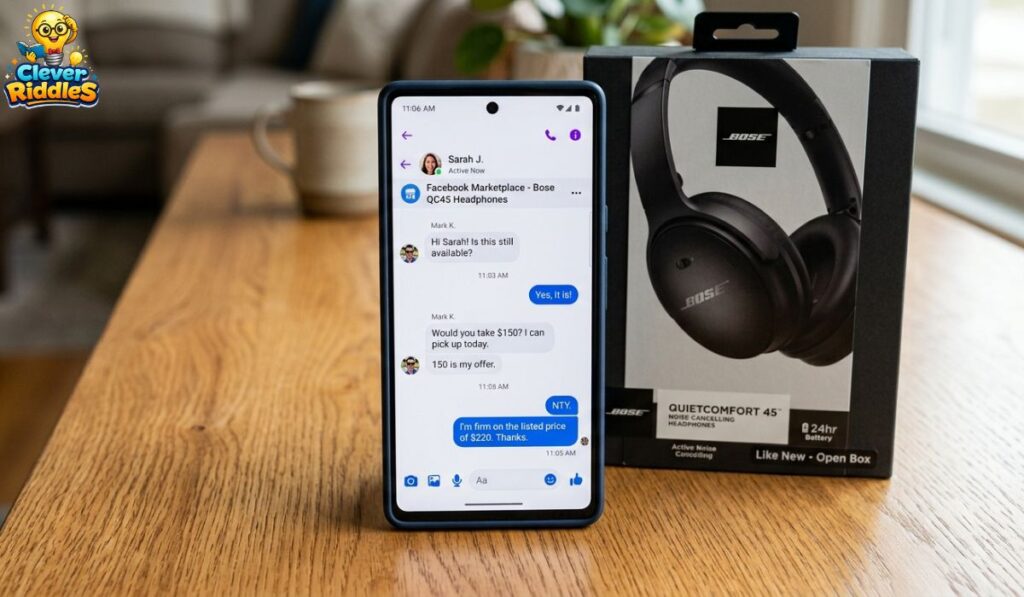
Online marketplaces are another hotspot for NTY. Buyers and sellers exchange dozens of messages daily. Both parties want efficiency. NTY helps sellers politely decline lowball offers and buyers reject overpriced items.
On Facebook Marketplace, if a buyer offers half your asking price, you can respond with NTY. It is professional enough to maintain respect while firmly rejecting the offer. On OLX and similar platforms, NTY serves the same purpose. It keeps negotiations moving without wasted time.
How to Use NTY in Conversations (With Real Examples)
Casual NTY Examples (Friends and Family)
Casual conversations are where NTY feels most natural. You are talking to people you know well. Politeness matters but formality does not.
Friend: Hey, want to come to the movies tonight?
You: NTY, I am tired. Maybe next time.
Sibling: I ordered extra fries. Want some?
You: NTY, I am full.
Parent: Do you need help with your homework?
You: NTY, I have got it covered.
These examples show how NTY works seamlessly in everyday family and friend interactions. It is polite, efficient, and never feels cold when delivered with the right context.
NTY Examples in Professional Chats (Slack, Teams)
Professional settings require more caution. NTY can work in workplace chats but only when the tone is right. Slack and Teams are casual enough for acronyms but you need to know your audience.
Colleague: Want to join the brainstorming session at 3 PM?
You: NTY, I have a deadline to meet. Thanks for asking.
Team Lead: Can you take on this additional project?
You: NTY, my current workload is already full.
Manager: Would you like to present the quarterly report?
You: NTY, I am not comfortable with public speaking yet.
Notice how these responses include extra context. You do not just say NTY and stop. You add a brief reason to maintain professionalism and respect.
NTY Examples in Marketplace Deals
Marketplace conversations demand clarity and firmness. Buyers and sellers negotiate constantly. NTY helps both sides communicate their boundaries without conflict.
Buyer: Will you take 500 for this phone?
Seller: NTY, my listed price is firm at 700.
Seller: Do you want me to deliver this tomorrow?
Buyer: NTY, I can pick it up myself.
Buyer: Can you include the charger and case for free?
Seller: NTY, those are sold separately.
NTY Examples in Gaming Chats
Gaming chats move fast. You do not have time for lengthy explanations. NTY works perfectly when you need to respond quickly and get back to the action.
Teammate: Want to switch to sniper class?
You: NTY, I am better with assault.
Player: Join our squad for the next match?
You: NTY, I am playing solo today.
Guild Member: Need help with the boss fight?
You: NTY, I am logging off soon.
Is NTY Rude or Polite? Understanding the Tone

Friendly Tone of NTY
NTY can be very friendly when used in the right context. It carries the same politeness as a spoken “No, thank you.” The tone depends entirely on your relationship with the person and the situation.
When you reply NTY to a friend, it feels natural and warm. You are not being dismissive. You are just being efficient. Your friend knows you well enough to understand the context behind your response.
Neutral Tone of NTY
Neutral is the default tone of NTY. It is neither warm nor cold. It simply communicates your answer without emotional baggage. This works well in professional settings or with acquaintances.
In marketplace conversations, neutral NTY responses keep things professional. You are not being rude. You are just stating your position clearly. This prevents misunderstandings and maintains good communication.
When NTY Can Sound Rude (And How to Avoid It)
NTY becomes rude when you use it without context or in the wrong setting. If someone asks a thoughtful question and you just reply NTY, that feels dismissive. It ignores their effort and makes you look uncaring.
Another rude scenario is using NTY in formal communication. Business emails, client messages, or official correspondence require complete sentences. NTY in these settings looks lazy and unprofessional.
To avoid sounding rude, always add context when needed. If the situation is formal or sensitive, explain your reasoning. NTY works best when the conversation is already casual and fast paced.
What Should You Reply When Someone Says NTY?
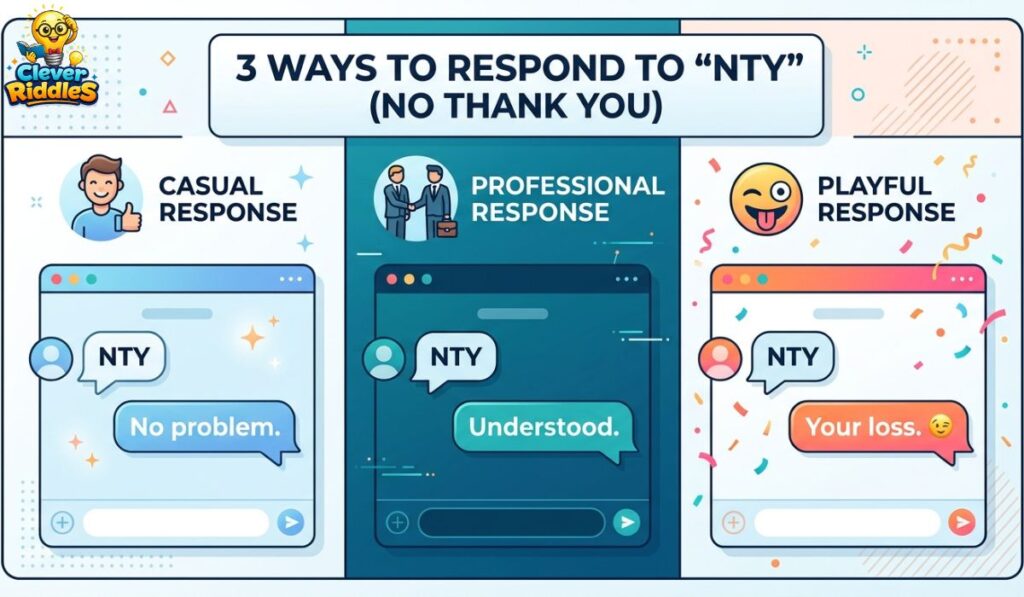
Casual Responses to NTY
When someone says NTY in a casual setting, you have several ways to respond. Keep it light and friendly.
Friend: NTY, I am not hungry.
You: No problem. Maybe next time.
Family Member: NTY, I have plans.
You: Okay, catch you later.
These casual responses acknowledge their answer without pushing further. It keeps the interaction smooth and stress free.
Professional Responses to NTY
Professional replies to NTY should maintain respect and understanding. Do not take it personally. Just move forward with a polite response.
Colleague: NTY, I am too busy.
You: Understood. Let me know if anything changes.
Team Member: NTY, I cannot take on extra work.
You: No worries. I will find someone else.
These responses show maturity and professionalism. They respect the other person’s boundaries while keeping the door open for future collaboration.
Playful Responses to NTY
Playful responses work among close friends and family. You can tease them gently without crossing any lines.
Friend: NTY, I do not want dessert.
You: Your loss. More for me.
Sibling: NTY, I am not watching that movie.
You: You are missing out on a masterpiece.
These playful responses add personality to the conversation. They show that you are comfortable with each other and can handle light teasing.
NTY vs Other Texting Acronyms — What’s the Difference?
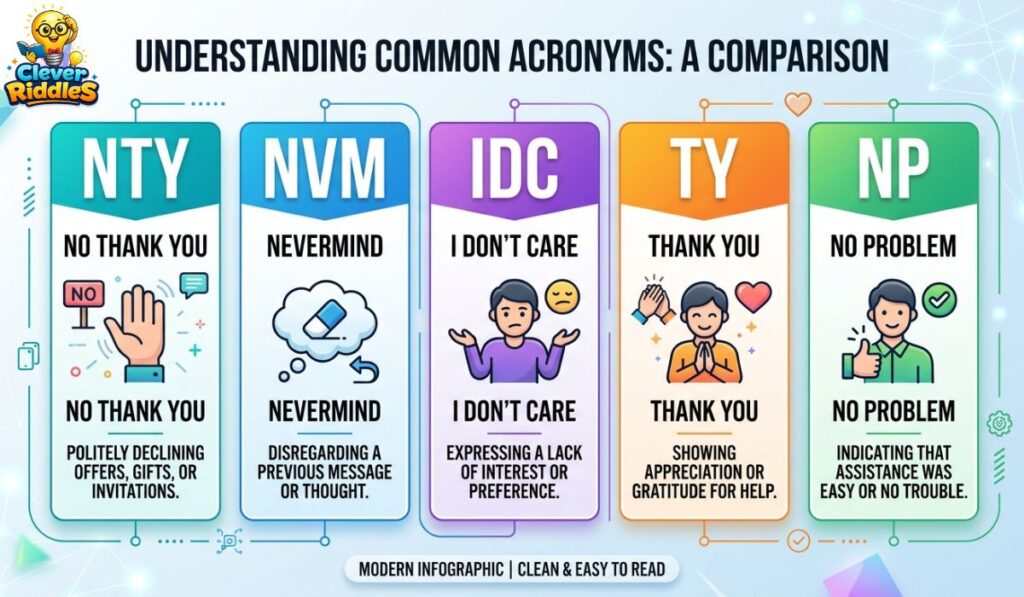
NTY vs NVM (Never Mind)
NTY and NVM serve completely different purposes. NTY is a polite decline. NVM is used when you change your mind or decide that something is not worth discussing anymore.
If someone offers you something you do not want, you use NTY. If you ask a question and then realize you do not need the answer, you use NVM. Both are useful but in totally different situations.
NTY vs IDC (I Don’t Care)
IDC carries a dismissive tone that NTY does not. IDC means you have no interest or investment in a topic. NTY only means you do not want the specific offer.
Using IDC can offend people. It sounds like you do not value their input. NTY is much safer because it limits itself to the offer in question. People generally respond better to NTY.
NTY vs TY (Thank You)
TY and NTY are opposites. TY means “Thank you.” You use it when you accept something or appreciate someone. NTY means “No, thank you.” You use it when you decline but still want to be polite.
People often use TY in response to NTY. For example, you offer something, they say NTY, and you reply TY for acknowledging your offer. It is a polite exchange from both sides.
NTY vs NP (No Problem)
NP means “No problem.” You use it when someone thanks you. NTY is used when you are declining something. They do not overlap in meaning.
If someone says TY, you say NP. If someone offers you something and you say NTY, they might say NP to accept your decision. These acronyms work together in conversation flows.
Common Mistakes People Make With NTY
Using NTY in Formal Emails
Formal emails require complete sentences. NTY has no place in client communication, official letters, or job applications. It looks careless and unprofessional.
Instead of NTY, write “No, thank you” or “I appreciate the offer but I must decline.” This shows respect and professionalism. Save NTY for casual chats where it belongs.
Assuming Everyone Knows What NTY Means
Not everyone knows texting acronyms. Your grandparents probably have no idea what NTY means. Your boss might not know either.
When you use NTY with someone unfamiliar, they get confused. They might think it means something else entirely. Always consider your audience before dropping unfamiliar acronyms into conversations.
Using NTY When You Actually Mean “Not You”
NTY and “Not you” are easy to confuse. NTY stands for “No, thank you.” It does not mean “Not you.” Using it incorrectly can cause major misunderstandings.
If you want to tell someone they are not the right person, explain it clearly. Do not use NTY. It will confuse everyone and create awkward moments.
What Does IMK Mean? (Bonus — Related Acronym You Keep Searching)
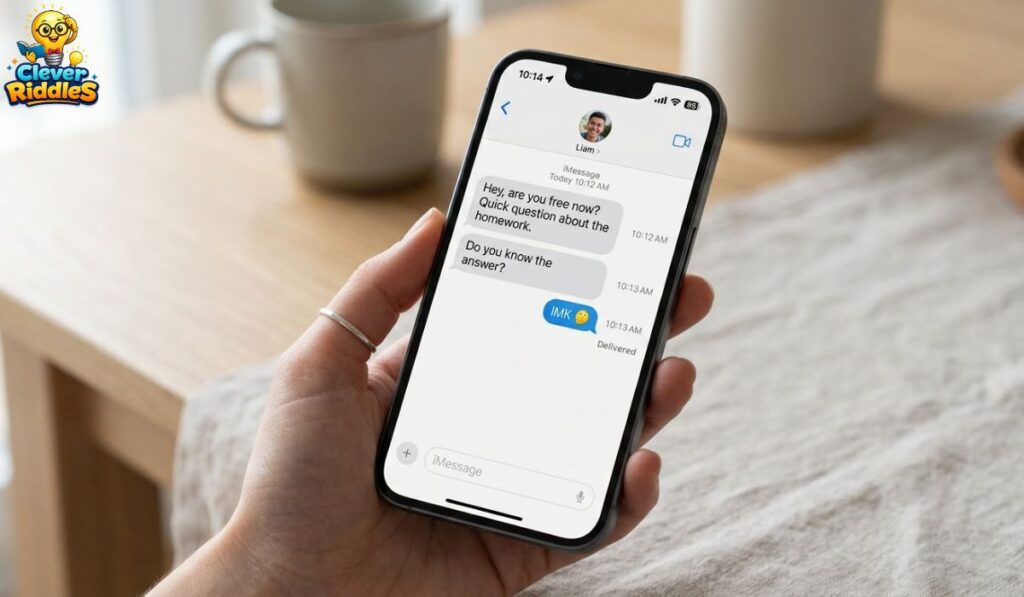
IMK stands for “I Might Know.” People use it when they think they have an answer but are not completely sure. It is less definitive than “I know” but more confident than “I do not know.”
In conversations, IMK shows humility. You are admitting that your knowledge is not absolute but you are willing to share what you think. This builds trust in relationships.
IMK appears on TikTok, Instagram, and in general texting. People use it when answering questions or guessing something. It is a useful acronym for situations where certainty is not guaranteed.
Why Texting Acronyms Like NTY Matter in Digital Communication
Texting acronyms are not just laziness. They represent an evolution in how humans communicate. Speed matters in the digital age and acronyms deliver that speed without sacrificing meaning.
NTY and its counterparts like IMK, LMK, and NVM have become essential tools. They help people maintain polite conversations while keeping up with fast paced digital interactions.
Understanding these acronyms improves your communication skills. You understand what others mean and they understand you. It reduces friction in conversations and makes digital interactions more efficient.
Frequently Asked Questions
Is NTY the same as “No Thank You”?
Yes. NTY is simply the abbreviated version of “No, thank you.” It carries the same meaning and politeness level but in a shorter format.
Can I use NTY in a professional email?
No. Professional emails require full sentences and proper etiquette. Use “No, thank you” or a more detailed polite decline instead of NTY.
Does NTY have any other meanings?
No. NTY specifically means “No, thank you” in texting and online communication. There are no other common interpretations.
Is NTY used only by teenagers?
No. People of all age groups use NTY as long as they are familiar with texting acronyms. It is not limited to any specific generation.
What does IMK mean in texts from a girl?
IMK means “I Might Know.” It is used regardless of gender when someone thinks they have the answer but are not completely sure.
What does IMK mean on TikTok?
IMK on TikTok has the same meaning as in general texting. It stands for “I Might Know” and is used in comments, captions, and direct messages.
What does LMK mean in texting?
LMK stands for “Let Me Know.” People use it when they want information or feedback from someone else. It is a request for a response.
How do you respond to IMK?
When someone says IMK, you can reply with “Let me know what you think” or “Cool, keep me posted.” You are acknowledging their uncertainty while encouraging them to share.
Final Thoughts
NTY is a simple but powerful tool in modern digital communication. It saves time, maintains politeness, and works across multiple platforms. Understanding how to use it correctly makes your conversations smoother and more efficient.
The key is knowing when to use NTY and when to avoid it. Casual chats welcome it. Professional settings do not. Context is everything. If you master this balance, your digital communication skills will improve significantly. Keep learning new acronyms and stay updated with evolving texting culture.

Emilia is a passionate content writer and meaning explorer at Cleverriddles.com, dedicated to helping readers understand words, phrases, and concepts in the simplest way possible. With a strong interest in language, SEO, and digital trends, she creates easy-to-read, informative content that adds real value to users.